 |
||||||||||||||||||||||||||||||||||||||||||||||||||||
|
|
||||||||||||||||||||||||||||||||||||||||||||||||||||
|
Notice: This page is no longer maintained.
Swami Karpatri - The Linga and the Great Goddess
|
 |
This bilingual edition (Hindi-English) presents a new translation - the fruit of a collective work - besides the original text in devanagari, in the first book by Swami Karpatri published in English. |
Introduction and edition by Jean Louis Gabin. Translated by Gianni Pellegrini and others
|
Interfaith dialogue in India
The following article was published on November 20th 2008 in Varanasi, just before the terrorist attacks in Mumbai.
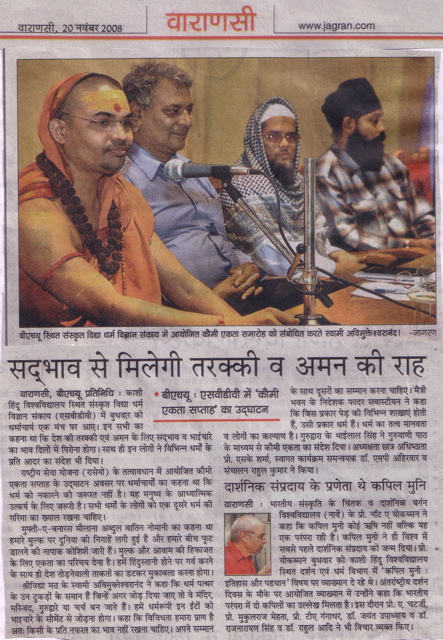
The way to Peace and Progress is found Through Benevolence.
Dainik Jagaran, Varanasi, 20 November 2008.
Different dharmacharyas [religious masters] came together on a single platform on Wednesday [19th November 2008] in the Faculty of Sanskrit Vidya Dharma Vigyan (SVDV) in Banaras Hindu University. They all said that for the attainment of peace and progress in the country all the hearts should be thread with benevolence and brotherhood. They also gave the message of respect for the different religions.
On the occasion of the inauguration of the Week for Religious Unity (Kaumi Ekta Saptah), organized under the supervision of the National Service Programme (Rashtriya Seva Yojna), the dharmacharyas said that there was no need to neglect religion. Religion is necessary for the spiritual elevation of man. The followers of all religions should maintain the dignity of the other religions.
The Mufti-e-Banaras Maulana Abdul Batin Nomani said that the glance of the whole world was set over our country, and there are some unscrupulous attempts to bring dissension among us. For the protection of the country and the people there is need to show unity. We should feel pride to be Indians [hindustani] and should confront the obstinacy of the forces of separation.
Swami Avimuktesvaranand from Srividya Math said that religions [dharma] were like pieces of stone that, if put together, result in temples, mosques, gurudwaras and churches. We should join together these religion-stones with the cement of brotherhood. He said that diversity is our very life [prana], so we should not harbour feelings of hate against anyone. We should keep our dignity and respect that of others. Father Sebastian, the director of Maitri Bhavan, said that in the same way as a tree has different branches, so are the different religions. The basis of religion is humanity and the welfare of the people. Bhailal Singh from the Gurudwara said that the words of the gurus preach the message of religious unity. The meeting was lead by Prof. S.K. Sharma, welcome was extended by M.P. Ahirvar and directing was done by Rahul Kumar.
Copyright Dainik Jagaran
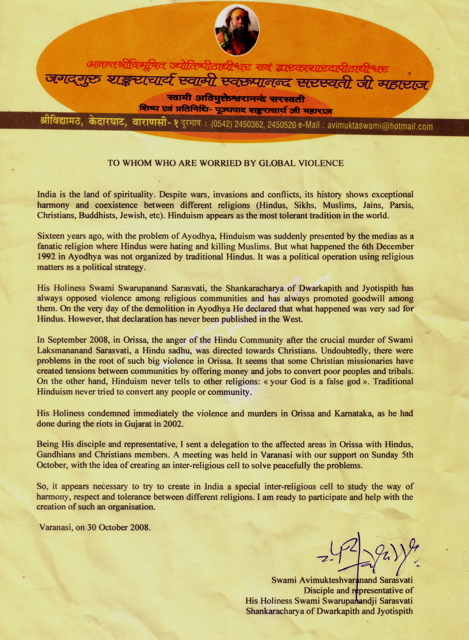
A message from the Shankaracharya of Dwarkapith and Jyotispith
In the face of the 2008 communal violence in India, the spokesman for the Shankaracharya of Dwarkapith and Jyotispith has issued a statement calling for inter-religious dialogue.
Issue 2 of Eye of the Heart: A Journal of Traditional Wisdom
Eye of the Heart: A Journal of Traditional Wisdom Issue 2, 2008 (ISSN: 1835-4416) is now available.
The Western Monastic Art of Lectio Divina by Fr Michael Casey OCSO
Keys to the Bible by Frithjof Schuon
Metaphysical symbols and their function in theurgy by Algis Uzdavinys
The reconstruction of time in the Vedic fire altar by Adrian Snodgrass
The Trinitarian Mystery of Gaud?ya Vaisnavism by Klaus Klostermaier
Abrahamic symbolisms of the number 72 by Timothy Scott
Creation, Originality and Innovation in Sufi Poetry by Patrick Laude
Eye of the Heart is an Open Access Journal freely available online. A print-on-demand version is available at cost value through La Trobe University, Campus Graphics: www.latrobe.edu.au/campusgraphics/pod/eyeoftheheart.php.
Visit our website: www.latrobe.edu.au/eyeoftheheart
Issue 3 will be available May 2009.
Eye of the Heart welcomes articles from scholars, academics, post-graduates and students.
We welcome your comments.
Vincit Omnia Veritas: Collected Essays
Vincit Omnia Veritas: The journal of perennial studies was the online journal of Religio Perennis: A Gate to Quintessential Esoterism (www.religioperennis.org) founded and managed by Renaud Fabbri (editor), Patricia Reynaud and Charles Amir Perret.
Vincit Omnia Veritas was published biannually from January 2005 to July 2007. The six issues produced included republications and original articles. It was felt that the original articles produced for Vincit Omnia Veritas might be presented in a collected format. To that end, Religio Perennis, with the assistance of the Philosophy & Religious Studies program, La Trobe University, Bendigo, and Eye of the Heart: The Journal of Traditional Wisdom, is happy to offer the following collection of original essays.
Vincit Omnia Veritas: Collected Essays includes works by Renaud Fabbri, Barry McDonald, Michael Fitzgerald, Timothy Scott, Rodney Blackhirst, Harry Oldmeadow and James Morris.
Vincit Omnia Veritas: Collected Essays is made available as a print-on-demand publication through Eye of the Heart: A Journal of Traditional Wisdom and La Trobe University, Bendigo, Australia.
To purchase Vincit Omnia Veritas: Collected Essays visit www.latrobe.edu.au/eyeoftheheart.
Eye of the Heart Issue 2, 2008 will be available November 2008. It includes essays by Fr Michael Casey OCSO, Klaus Klostermaier, Patrick Laude, Timothy Scott, Frithjof Schuon, Adrian Snodgrass, Algis Uzdavinys.
Eye of the Heart (La Trobe University, Bendigo) announces the Ananda Coomaraswamy Essay Prize.
ANANDA COOMARASWAMY ESSAY PRIZE
Ananda Kentish Coomaraswamy (1877-1947), was the curator in the Department of Asiatic Art of the Boston Museum of Fine Arts. He is recognised as one of the great art historians of the twentieth century. His writings on traditional symbols are some of the most enriching of their kind. No less a scholar than Heinrich Zimmer described Coomaraswamy as “that noble scholar upon whose shoulders we are still standing.”
Eye of the Heart and the Philosophy and Religious Studies program (La Trobe University, Bendigo) announces the Ananda Coomaraswamy Essay Prize for the best essay on a traditional symbol or symbolism.
We are looking for essays that explore, à la Ananda Coomaraswamy, the meaning of traditional symbols. To give a more or less random sample of the kinds of symbols which might lend themselves to investigation: the damaru (drum) of ?iva, the Rainbow Serpent of the aboriginal peoples of Australia, the shofar (trumpet) blown on the Jewish Day of Atonement, the hijab (veil) in the mystical traditions of Islam, the symbolism of the blacksmith, the elixir of immortality of Lao Tzu, the ship of Ut-napishtim in the Epic of Gilgamesh, the conch shell in Botticelli’s Birth Of Venus, the meaning of the hyssop plant offered to Christ on the Cross, the Tibetan dilbu (bell), the emptiness of a Zen garden… and on and on.
Prizes are offered for best essay in an open category and best post-graduate essay. Each winner receives their choice of books from the catalogues of Fons Vitae Publishing (www.fonsvitae.com) and World Wisdom Books (www.worldwisdom.com), up to the value of $400 (US).*
All submissions should include a cover-note including contact details and a short biography.
Submission deadline: September 1st 2008.
All enquiries can be directed to the editor of Eye of the Heart, Dr Timothy Scott
La Trobe University, P.O. Box 199,
Bendigo 3552, Australia
Tel: +61 3 5444 7243; Fax: +61 3 5444 7970
Email: t.scott@latrobe.edu.au
Web: http://www.latrobe.edu.au/eyeoftheheart
*Each prize is made up of books and postage to the value of $200 (US) from
Fons Vitae Publishing and $200 (US) from World Wisdom Books.
 For more information ...
Meditation primordiale, la conception du Vrai
 |
Il s’agit de la traduction du tout premier livre de Frithjof Schuon, Leitgedanken zur Urbesinnung, paru en 1935 et réédité en 1989. L’ouvrage a été écrit entre 1928 et 1933. "C’est ainsi que la chose la plus contingente et la plus éphémère n’est pas suffisamment insignifiante pour échapper à ce tissu de relations ; rien ne pourrait être sans la Réalité divine ; rien ne pourrait se différencier si l’Unicité divine n’était pas obscurcie ; rien ne pourrait poindre si le Centre divin n’était pas perdu. Car d’une part, toute communauté d’attribut entre les choses, de la plus superficielle à la plus profonde, est une marque de l’Unité du Divin, et d’autre part, toute différence est un signe — et à la fois une conséquence — de la perte de cette Unité dans le monde ; tout arrêt est une manifestation de la Paix divine, et tout mouvement ne transmet rien d’autre que la séparation du monde d’avec le Divin, et atteste à la fois la sourde nostalgie du Divin et l’impuissance de ce qui s’agite ; que ce soit le flot inconstant de la pensée humaine ou la reptation sans but d’un ver. Il n’y a rien de fortuit ou même d’apparemment fortuit, car il ne peut rien y avoir qui soit dépourvu de raison ; c’est pourquoi ce qui existe en quelque manière que ce soit doit manifester le Divin en soi sous le mode affirmatif, ou les relations du monde au Divin sous le mode négatif." "Qu’est-ce que la Doctrine primordiale ? Elle est la connaissance des relations ultimes enveloppées dans des formes et se manifestant dans des formes, connaissance revenant sans cesse à travers les âges sous un nouvel aspect, mais restant éternellement identique à elle-même. Cette Vérité vivant dans de multiples formes et limitée par aucune, ramenant continuellement au pur Esprit, est la Doctrine primordiale. Elle n’est la production d’aucune pensée humaine. Elle n’appartient en propre à personne. L’homme qui la connaît la possède ; mais au fond, c’est elle qui le tient enlacé, c’est elle qui a absorbé le connaissant en elle — elle, l’Eternelle, qui a absorbé l’évanescent. C’est ainsi que la mer absorbe une goutte. Son entrée est partout et nulle part. Elle est sans origine et sans fin." |
Frithjof Schuon (1907-1998)
|
 |
Metaphysics. Cosmology. Tradition. Symbolism
|
2007 marks the start of the 26th year for Studies in Comparative Religion, which is now located in Bloomington, Indiana and sponsored by World Wisdom.
Studies in Comparative Religion was founded in Britain in 1963 by Francis Clive-Ross (1921–1981) and is the first and most comprehensive English-language journal of traditional studies. The journal was published under the name Tomorrow until 1967, when it was changed to its present name. Four quarterly issues per year, containing over 1,200 articles in total, were published during the first 25 years of Studies in Comparative Religion’s existence, before its publication was interrupted in 1987. William Stoddart served as the assistant editor for most of these years.
F. Clive-Ross clearly explained the journal’s goals in his introduction to the first issue:
Studies in Comparative Religion is devoted to the exposition of the teachings, spiritual methods, symbolism, and other facets of the religious traditions of the world, together with the traditional arts and sciences which have sprung from those religions. It is not sectarian and, inasmuch as it is not tied to the interests of any particular religious group, it is free to lay stress on the common spirit underlying the various religious forms.
One of our primary aims is to meet the need for accurate information created by the now world-wide interest in the question of “ecumenical relations” between the great religions, by providing a forum where writers of proven authority can exchange views on various aspects of religious life, doctrinal, historical, artistic and mystical, not forgetting the element of personal experience and reminiscence.
By collecting accurate information about the great religions under their many aspects and rendering them available to interested readers we feel we are fulfilling a very pressing need of our time and also contributing in a practical manner to the cause of inter-religious understanding. If there is to be an effective measure of this understanding at any level this can only be on the basis of accurate presentation both of teachings and facts. An ill-informed benevolence is no substitute for genuine insight, based on information that is neither willfully distorted nor confined to the surface of things.
In this manner we think that we are best serving the interest of our readers in their search for truth.
The overall goals of the journal remain as they were originally stated more than forty years ago by F. Clive-Ross. This second phase includes both an on-line and a paper journal.
 |
Sacred Web 20:
|
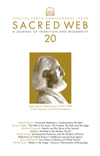 |
Editorial: “Standing Unshakably in the True”:
A Commentary on the Teachings of Frithjof Schuon
by M. Ali Lakhani
Drawing from Frithjof Schuon’s poetry in the World Wheel series to illustrate his teachings, the Editorial provides a commentary on his teachings under the Schuonian schematic of Truth-Prayer-Virtue-Beauty.
Primordial Meditation: Contemplating The Real
by Frithjof Schuon
Translated by Gillian Harris and Angela Schwartz
Sacred Web is honored to present the first English translation of this important work—the only book by Frithjof Schuon previously unpublished in English. The book, originally published in German in 1935 (when Schuon was 28 years old) under the title “Leitgedanken zur Urbesinnung”, is the first formal exposition of a primordial worldview based on Schuon’s extraordinary spiritual insights recorded in his notebooks between the ages of 21 and 28, and presented here in four separate collections—a remarkable testament to his spiritual genius.
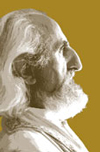
A Portfolio of Photographs of Frithjof Schuon
Sacred Web is indebted to the Estate of Frithjof Schuon to permit it to publish this portfolio of photographs of the great metaphysician, whose striking appearance was a reflection of his extraordinary nature.
Four Poems in Memory of Frithjof Schuon
by Barry McDonald
Barry McDonald, who was privileged to know Frithjof Schuon, was encouraged by him to write poetry. Now, on the occasion of Schuon’s birth centenary, McDonald has produced a selection of four poems dedicated to his patron’s memory and inspired by his teachings.
Beauty and the Sense of the Sacred:
Schuon’s Antidote to the Modern World
by Michael Fitzgerald
Drawing largely on Schuon’s own words, and accompanied by a selection of images that illustrate Schuon’s teachings about Beauty and the sense of the Sacred, this is the text of a presentation delivered at the Sacred Web Conference on “Tradition in the Modern World,” held in Edmonton at the University of Alberta, September 2006. [The full audio-visual presentation by Michael Fitzgerald is available on the Conference DVD through www.worldwisdom.com.]
Quintessential Esoterism and the Wisdom of Forms:
Reflections on Frithjof Schuon’s Intellectual and Spiritual Legacy
by Patrick Laude
This essay surveys Schuon’s nuanced teachings about the hierarchies of form in the context of his metaphysical explanation of the architecture of reality. Patrick Laude writes: “(T)he notion of form reveals an undeniable richness and complexity in Schuon’s works. It bears witness both to the liberty of the Spirit that ‘burns’ forms to reduce them to their essence, to the Eckhartian breaking of the shell that is a requirement for reaching the core, but also to a keen awareness of forms as testifying to degrees of reality, and therefore necessary elements of sacred mediation and balancing wisdom”, opening the way “to an inner transcending of forms on the secure ground of a keen discernment of formal qualities”.
“Made in the Image”:
Schuon’s Theomorphic Anthropology
by Timothy Scott
Commencing from the traditional viewpoint of Man’s theomorphic nature in which Universal Man is made in the Divine Image, this essay proceeds to survey Schuon’s key teachings related to this anthrolopgy, focusing on three topics: the tensions between man’s divinity and animality, the symbolism of the sexes, and Schuon’s primordial understanding of nudity. The essay emphasizes the underlying connection between the theomorphic nature of Man, as represented by the human body, and the theocentric purpose of human existence: the “remembrance” of Man’s essential nature through the unifying vision of the Intellect.
The Milk of the Virgin:
The Prophet, the Saint and the Sage
by Renaud Fabbri
This essay explores certain misunderstandings about Schuon’s position: was he a prophet (instituting a new transcendent religion or primordial message), a saint (some have portrayed him as a Muslim saint operating within the structures of Sufism), or, as the author contends, a sage (based on the Platonic or Hindu model)? Emphasizing the Marian foundation of his teachings, the author argues that Schuon is best understood as being a paracletic spokesman of the sophia perennis and a shakta.
Note on Contributors
A Word of Appreciation
For more information
Announcement of new La Trobe University journal & call for articles
The Philosophy and Religious Studies discipline at La Trobe University, Bendigo, announces the launch of Eye of the Heart, a scholarly, peer-reviewed journal in the field of Traditional Philosophy and Religious Studies.

Call for articles:
Eye of the Heart is seeking original scholarly articles. There are no thematic constraints; however, as part of the early development of the journal we are seeking articles that will clarify and defend key traditional methodologies, such as Hermeneia (Greek), Nirukta (Hinduism), Lectio Divina (Christian), and Kabbalistic practices such as gematria, notariqon, and temura. Other areas of interest include: Metaphysics, Theology, Philosophy, Cosmology, Mythology, Symbolism, Sacred art, Religious forms, the Spiritual Life, and the Sophia Perennis.
Eye of the Heart welcomes articles from scholars, academics, post-graduates and students. Articles that satisfy the peer-review process will be recognised as such; articles that do not fit the academic criteria for peer-review but are deemed of value will be published under a non peer-reviewed category.
Proposals or letters of query can be directed to editor:
Dr Timothy Scott
Arts Program
La Trobe University, P.O. Box 199,
Bendigo 3552, Australia
Tel: +61 3 5444 7243
Fax: +61 3 5444 7970
Email: t.scott@latrobe.edu.au
For more information
Please display and/or distribute our flyer: Eye of the Heart (PDF)

The four new volumes of Frithjof Schuon's poetry in English
 |
World Wisdom is honored to publish these beautiful 4 volumes in English: |
 |
 |


Hans Kury, Mort et renaissance spirituelle
 |
Préface (p. 5) |
Hans Küry (1906-1987)
|
Charles Upton, the System of the Antichrist
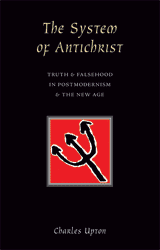 |
The System of Antichrist examines the present religious and cultural scene from the standpoint of traditional metaphysics and critiques the New Age spiritualities within their postmodern context. Its many references to René Guénon and Frithjof Schuon also help introduce these important but little-known ‘traditionalist’ thinkers. |
Charles Upton
|
Une voie soufie dans le monde: la shadhiliyya
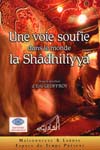 |
L'espace égyptien, où la voie soufie des Shâdhilis a vu le jour, est riche des sanctuaires de ses trois premiers maîtres : Abû l-Hasan al-Shâdhilî, Abû l-`Abbâs al-Mursî et Ibn `Atâ' Allâh. La Shâdhiliyya, fondée au XIV siècle, a pourtant une origine maghrébine. En effet, Ibn Mashîsh, l'ermite du Rif marocain, transmit son "secret" à son unique disciple, al-Shâdhilî, qui hérita également d'Abû Madyan, le saint de Tlemcen. |
Une voie soufie dans le monde: la shadhiliyya
|
Fabrice Midal, L'esprit de la chevalerie
Fabrice Midal has recently published a book on spiritual knighthood and modernity.
 |
Le chevalier incarne le dépassement de soi et une spiritualité qui repose sur l'excellence. Mais pouvons-nous aujourd'hui encore vivre cette voie héroïque ? La chevalerie n'est-elle pas une institution dépassée, sexiste, violente, exclusivement aristocratique ? Fabrice Midal montre que, au contraire, les vertus et aspirations caractérisant l'idéal chevaleresque pourraient s'avérer précieuses pour notre société. Il nous explique comment cette notion de chevalerie a été vécue et pensée par les Celtes, les Grecs, les troubadours du Moyen Age. Puis, il confronte ce vaste héritage aux défis de notre temps démocratie, mondialisation de l'économie, déracinement, difficultés d'un engagement dans la cité..., et rappelle comment divers grands témoins du XXe siècle (Saint-Exupéry, Simone Weil, René Char...) y ont trouvé des ressources fécondes. Enfin, il donne des clés pour permettre à chacun de tendre, à chaque instant de sa vie, vers cet idéal. Fabrice Midal trace ainsi les contours d'une chevalerie des temps modernes fondée sur l'authenticité, le courage, le souci de l'excellence et l'engagement, pour le bien de tous. |
L'esprit de la chevalerie : Des atouts pour l'homme moderne
|
His last book on Buddhism will be released on March 26th 2006:
Quel Bouddhisme pour l'Occident ? Sueil, Paris, 2006
To read a complete list of his publication, visit his personal website: http://www.fabrice-midal.org/
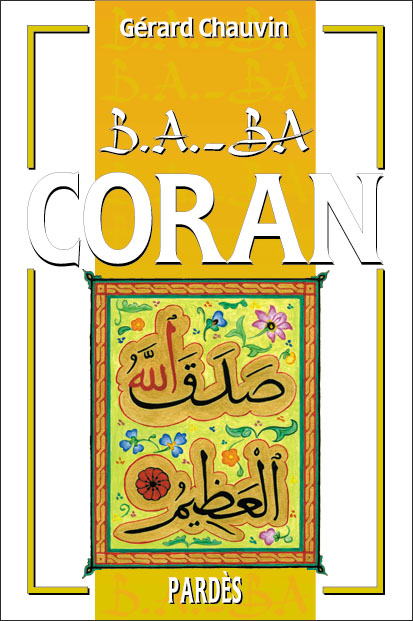
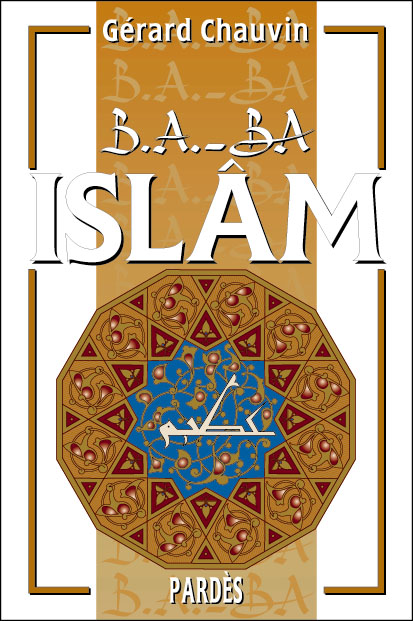
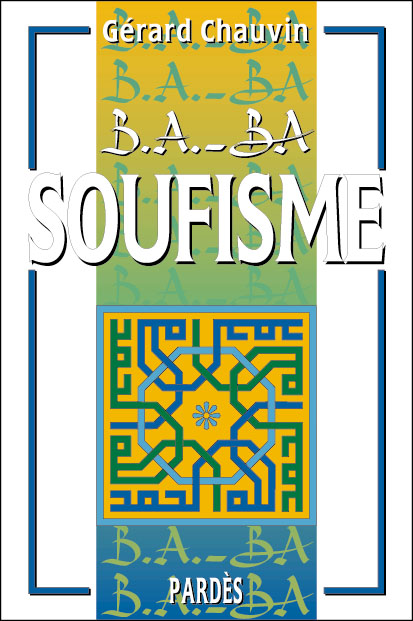
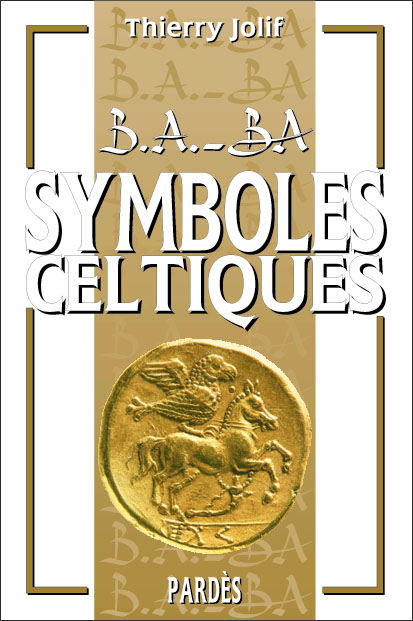
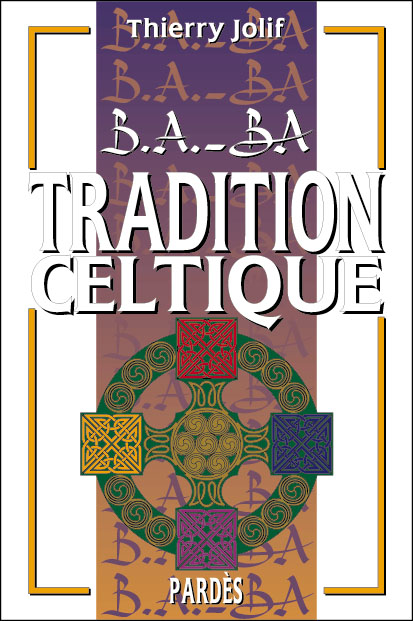
La Collection BA-BA
Les Editions Pardès publient la collection BA-BA de découverte des religions et de la spiritualité.
Pour plus d'informations, vous pouvez contacter les Editions Pardès, 44 rue Wilson – 77880 Grez-sur-Loing, France
Tél. : 01 64 45 67 23 Fax : 01 64 45 67 25
Diffusion DILISCO
|
|
|
|
|
|
|
Chant Gregorien |
Chiisme |
Coran |
Croix |
Heraldique |
Islam |
|
|
|
|
|
|
|
Mythologie
|
Shinto |
Soufisme |
Symbolisme
|
Symboles |
Tradition
|






Complete List of Publications from Sophia Perennis featuring 19 new titles and 13 upcoming titles
The Collected Works of René Guénon is now complete, in both paper and cloth; 20% discount for the whole set: $377.48 [£263.56]; for Perfect Bound; $660.68 [£430.72] for Trade Cloth; inquire via perennis@taconic.net
The long-awaited title René Guénon: Some Observations by Frithjof Schuon is now available
The Simple Life of René Guénon by Paul Chacornac has been reprinted:
the definitive biography, including photographs and original drawings
Upcoming: the final, authorized edition of The Collected Works of Ramana Maharshi
Available retail through www.sophiaperennis.com, www.amazon.com,www.barnesandnoble.com, www.amazon.co.uk
Bookstores: 20% discount for under 5 copies, 40% thereafter;
Libraries: 20% discount.
Order through Ingram, Baker & Taylor or Bertram Books -- or inquire via perennis@taconic.net
The complete List of Publication from Sophia Perennis
|
Copyright© 2003, 2004, 2005, 2006 and 2007 Religioperennis. Nothing on any of the pages of this website may be reproduced in any fashion except by written permission of the webmaster or/and the authors of the articles displayed. |
||
|
Infinite Menus (c) Copyright, 2005 OpenCube Inc. All Rights Reserved. |